
What Does EMDR Therapy Actually Feel Like?
Ready to Step Out of Survival Mode?
Demystifying trauma processing, virtual care, and what to expect in a session.
When you’ve lived in survival mode for months or years, carrying trauma, chronic stress, or the weight of late discovered neurodivergence, your mind and body can start to feel completely disconnected.
You might logically understand that you are safe now, but your body hasn’t received the message. Your heart still races when a boundary is crossed, your jaw stays clenched, or you freeze when faced with everyday overwhelm.
If you’ve researched trauma healing online, you’ve likely come across EMDR therapy. But despite its popularity, many people are hesitant to try it because they aren’t sure what actually happens inside a session. Do you have to relive your worst memories in graphic detail? Will you lose control? Will it make things worse?
Let’s demystify how EMDR works, how we integrate somatic care and sometimes other modalities, and what the healing process actually feels like.
What is EMDR Therapy?
EMDR stands for Eye Movement Desensitization and Reprocessing.
When an overwhelming or traumatic event occurs, our brain’s natural information-processing system can become overloaded. Instead of archiving the experience as a past memory, the event gets "stuck" in the nervous system with the original sights, body sensations, and negative core beliefs. Examples of those beliefs are: "I’m unsafe," "It’s my fault," or "I am broken".
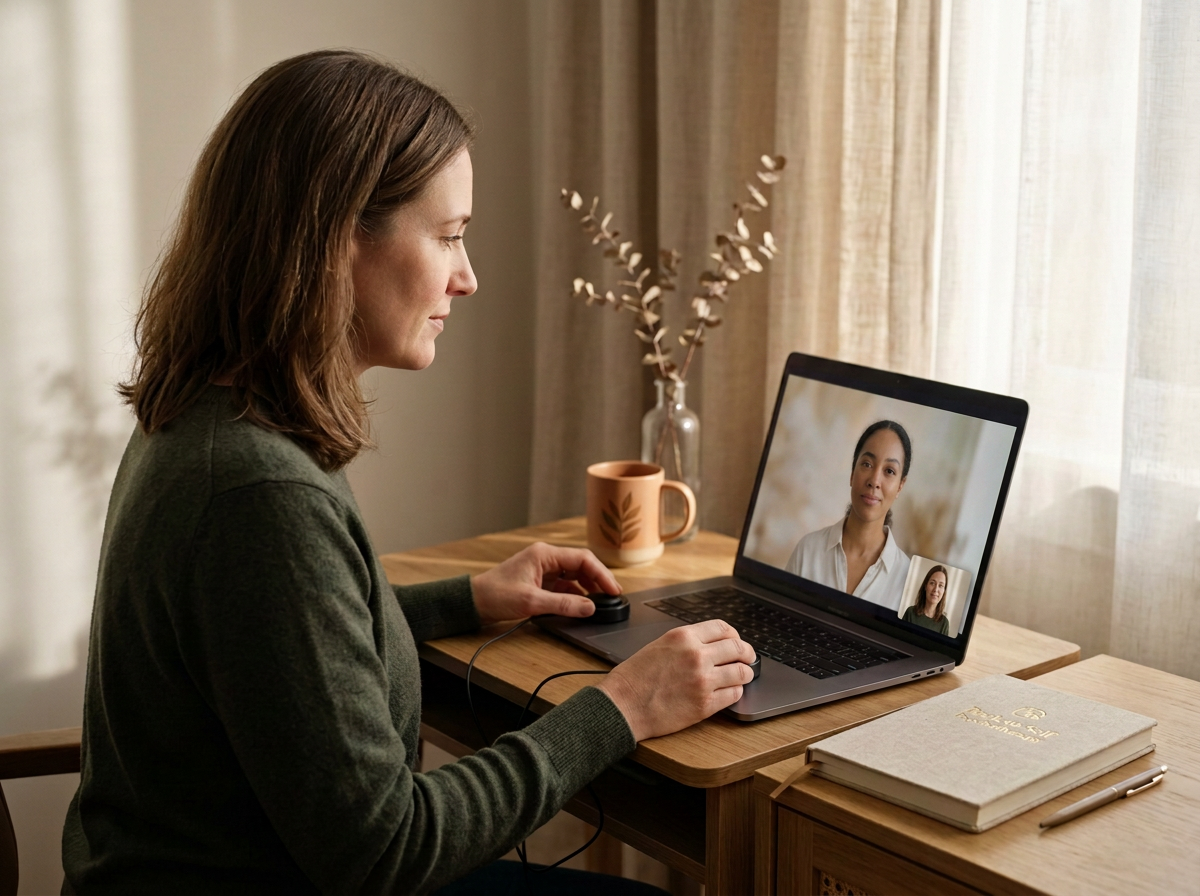
EMDR uses Bilateral Stimulation (BLS), typically gentle, alternating left-to-right eye movements, tapping, or audio tones, to activate both hemispheres of the brain. This mimics the natural memory-processing that occurs during REM sleep, allowing your nervous system to digest the stuck memory and move it into the past where it belongs.
An Integrative Approach to Trauma & Healing
Traditional talk therapy is a powerful foundation for building self-awareness, mapping your patterns, and gaining cognitive insight. At Back to Self Psychotherapy, we build directly on that foundation by weaving in body-honouring modalities like EMDR, somatic techniques, and Internal Family Systems (IFS) alongside traditional cognitive tools. Because trauma and stress impact both our thoughts and our physical physiology, combining mind and body approaches helps complete the healing loop allowing the cognitive insights you gain in therapy to truly settle into your nervous system.
Rather than taking a rigid, "one-size-fits-all" approach, we adapt session by session to meet you where you are. In one session, we might use CBT strategies to navigate everyday anxiety or reframe an overwhelming thought. In another, we might use EMDR to reprocess a stuck memory, incorporate somatic awareness to help your body release stored tension, or work with IFS to bring compassion to the protective parts of you that stepped up to keep you safe. By honouring both your mind and your physical experience, therapy becomes a fluid, responsive space designed to help you feel genuinely grounded again.
What Does an EMDR Session Actually Look Like?
EMDR is not a quick fix, and it is not hypnosis. You remain 100% awake, in control, and grounded in the present moment throughout every single session. A trauma-informed EMDR journey typically moves through three key phases:
1. Grounding and Building Safety First
Before touching heavy memories, we spend time (sometimes a lot of time) building your internal "container” and a “safe and calm” place. We help your nervous system learn what safety actually feels like through mindful and somatic resourcing, breathwork, and grounding exercises. You will never be rushed into trauma processing until your body feels completely steady.
2. Reprocessing Without Retelling
Once we’ve built a strong foundation of safety and grounding, we’ll gently map out the specific memories, triggers, or patterns you’d like to work through. During active EMDR processing, you briefly hold a memory or physical sensation in mind while tracking bilateral stimulation, such as alternating visual cues or gentle tapping. After each brief set, we pause to check in so you remain supported and in control every step of the way.
Most importantly, you never have to describe every graphic detail of your trauma out loud. Your role is simply to observe whatever naturally surfaces, whether that’s a shift in your body, an emotion, or a new insight, with curiosity and zero judgment.
3. Integration and Body Settlement
Over time, the heavy emotional charge attached to the memory dissolves, allowing your body to recognize that the threat is over. What once triggered overwhelm or panic transforms into a quiet chapter of your past; one that carries context, but no longer holds power over your present.

The body keeps the score, but it can also learn safety again.
EMDR doesn't erase your past; it simply strips away the pain and alarm, leaving you with the peace and safety you deserve today.
Is EMDR Right for You?
EMDR is globally recognized for treating Post-Traumatic Stress Disorder (PTSD), but its benefits extend far beyond single-event trauma. It is deeply effective for:
Complex Trauma (C-PTSD) and long-standing relational wounds
Chronic anxiety, panic, and phobias
Deep-seated negative beliefs (such as "I am unsafe" or "I am never enough")
Neurodivergent burnout and the exhaustion of chronic masking
Medical trauma and living with chronic health challenges
Virtual EMDR Therapy Across Ontario
Can EMDR be done virtually? Yes, absolutely.
Virtual EMDR is just as effective as in-person care when facilitated by a skilled, trauma-informed clinician. Using secure, PHIPA-compliant telehealth platforms and specialized visual or auditory bilateral stimulation tools, you can engage in this deep, transformative work from the comfort and privacy of your own home.

You Don't Have to Do It Alone
Healing doesn't require reliving your hardest moments in detail. It’s about gently creating the space your nervous system needs to feel safe again.
Taking the First Step Back to Yourself
Healing isn’t about "fixing" what is broken within you; it’s about gently unburdening what you’ve had to carry for far too long.
Whether you live in Ontario or select provinces across Canada, you don't have to navigate trauma recovery alone. You can reach out through the Contact tab, or click "BOOK NOW" at the bottom of the screen to schedule a free, low-stress 15-minute introductory call.
Let’s connect and see how we can support your journey back to yourself.
